The B2B Marketing Funnel Explained: What It Is and How to Optimize Each Stage
Published Jun 17, 2026
The B2B marketing funnel is the model that describes how prospects move from first exposure to loyal customer. Most B2B teams either ignore the funnel entirely or optimize one stage without regard for the others, and both approaches produce weak results. This guide walks through what the funnel actually is in 2026, the six stages that matter, and specific tactics that consistently improve conversion at each stage. Written for B2B marketing leaders and founders who need to fix a specific bottleneck without rebuilding the whole system.
What Is the B2B Marketing Funnel?
The B2B marketing funnel is a stage-by-stage map of how prospects move from unaware of your product to actively promoting it. The classical stages are awareness, interest, consideration, purchase, retention, and advocacy. Each stage has its own drop-off rate, its own optimization levers, and its own metrics.
In 2026, the funnel is less linear than it used to be. Buyers loop between stages, do research in parallel across multiple vendors, and involve buying committees of 5 to 12 people. But the stages still map to meaningful decision points, and treating them as such makes optimization easier than treating each buyer journey as unique.
Stage 1: Awareness
Awareness is the moment a prospect first learns that a category (or your specific brand within it) exists. Awareness comes from content that appears in search results, from AI search citations, from LinkedIn posts, from podcast mentions, and increasingly from partner and word-of-mouth referrals.

Tactics that work: publishing structured content that answers specific buyer questions (see our GEO guide), sponsoring podcasts in your niche, and building a personal brand for the founder or CMO. Metric to track: share of voice for your top 20 target keywords or queries.
Stage 2: Interest
Interest is when a prospect actively engages with your content or brand: they visit your site, subscribe to your newsletter, follow the founder on LinkedIn. Interest is measurable engagement, not just impression.
Tactics that work: lead magnets that provide real value (benchmark reports, calculators, templates), newsletter subscriptions that deliver useful weekly content, and repeat visits to your site tracked via cookies or account-based intent tools. Metric: time-on-site over 3 minutes, or 3+ page visits per session for return visitors.
Stage 3: Consideration
Consideration is when a prospect shortlists you as a potential vendor. In B2B, this typically involves reading comparison content, requesting demos, and pulling in colleagues to review your product.
Tactics that work: honest comparison content (like our Scale Partner vs. Acceleration Partners series), detailed pricing pages, customer case studies with named clients and specific numbers, and easy demo scheduling. Metric: demo requests or "contact sales" form submissions.
Stage 4: Purchase
Purchase is the closed-won moment. In B2B, this typically involves contract negotiation, procurement review, and (for enterprise) legal and security review.

Tactics that work: prepared answers for security and compliance questions, transparent pricing, streamlined contract templates, and named account executive support. Every friction point in the purchase stage costs deals. Metric: win rate, and average deal cycle time.
Stage 5: Retention
Retention is the stage most B2B marketing teams under-invest in. It is also where the biggest revenue upside lives. A five-point improvement in net revenue retention typically produces more ARR growth than a 20 percent increase in new customer acquisition.
Tactics that work: structured onboarding for the first 30 days, quarterly business reviews for larger accounts, in-product usage nudges for early warning signs of churn, and dedicated customer success ownership. Metric: net revenue retention.
Stage 6: Advocacy
Advocacy is when customers actively promote your product without incentive: writing case studies, referring peers, speaking on your behalf. Advocacy compounds because every advocate produces multiple new awareness-stage prospects at near-zero CAC.
Tactics that work: formalized referral programs, customer advisory boards, ambassador programs for power users, and asking for reviews at the right moments (usually 60 days after activation, and after a documented success). Metric: percentage of new pipeline from customer referrals.
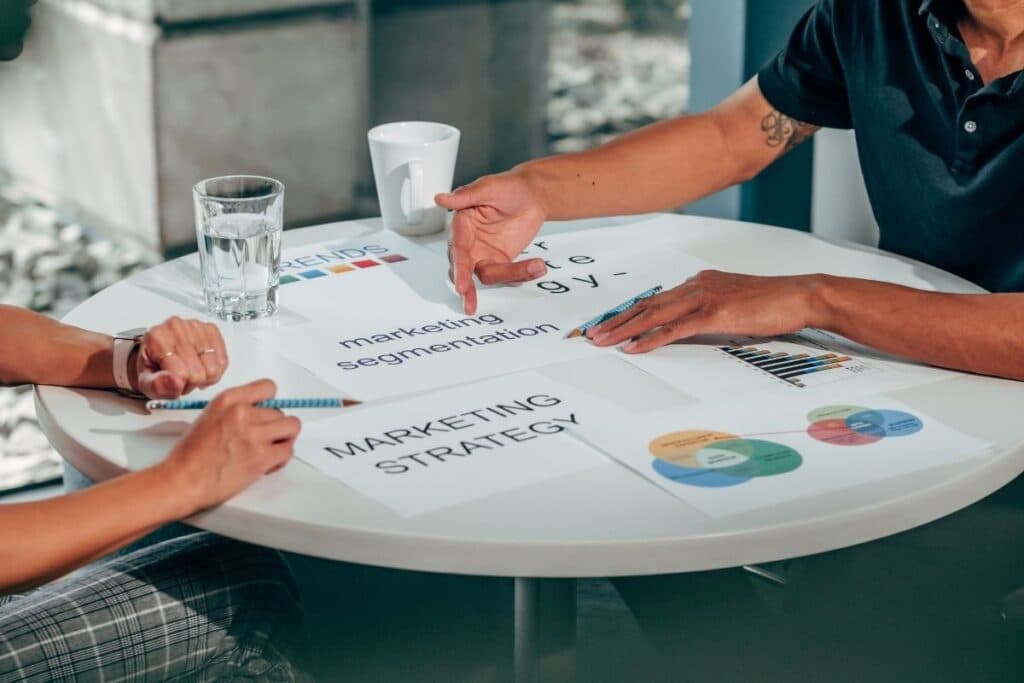
Why Customer Segmentation Matters at Every Stage
Not every prospect belongs in every stage of the same funnel. Enterprise prospects require different content, longer nurture cycles, and different sales support than SMB prospects. Segmenting your funnel by customer type produces materially better conversion at every stage.
Practical move: define two to four segments (typically by revenue potential or industry) and build parallel funnels with segment-appropriate content and tactics. The overhead is real but the conversion improvement usually pays back within 6 months.
How to Diagnose Which Funnel Stage to Fix First
Measure conversion between each stage. Whichever stage has the biggest drop-off relative to industry benchmarks is your first fix. Common patterns:
Weak awareness (below-benchmark traffic): invest in content and GEO first
Weak interest (traffic without engagement): improve content quality and lead magnets
Weak consideration (engagement without demos): invest in comparison content and case studies
Weak purchase (demos without wins): fix pricing, procurement, or sales enablement
Weak retention (wins with high churn): fix product or onboarding, then customer success
Weak advocacy (retention without referrals): build formal referral and case study programs
How Long Should Prospects Take to Move Through the Funnel?
B2B sales cycles vary widely, but there are practical benchmarks worth knowing. For SMB B2B: 14 to 30 days from awareness to purchase. For mid-market: 45 to 90 days. For enterprise: 90 to 180 days, sometimes longer. If your funnel is significantly slower than these benchmarks, the bottleneck is usually consideration (weak comparison content) or purchase (procurement friction).
Speeding up the funnel is not always the right goal. Compressing an enterprise cycle from 120 to 80 days often means skipping the trust-building steps that produced the win in the first place. Optimize each stage's quality, and cycle time usually improves as a side effect.
Tools That Help Instrument Your Funnel
You cannot optimize what you do not measure. The minimum instrumentation for a B2B funnel: HubSpot or Salesforce CRM (to track pipeline stage), Google Analytics 4 or Fathom (to track site behavior), and a simple weekly scorecard that shows conversion rates between each stage. Advanced instrumentation adds product analytics (Mixpanel, PostHog), customer intent tools (6sense, Clay), and cohort retention analysis in the CRM.
Small teams should keep instrumentation lightweight for the first year. Better to have three metrics reviewed weekly than 20 metrics reviewed never.
Common Mistakes in B2B Funnel Management
Optimizing top of funnel only. Awareness without conversion further down produces expensive traffic and no revenue.
Ignoring the middle. Consideration and purchase stages are where B2B deals actually decide, but most teams under-invest here.
Treating retention as a customer success problem, not a marketing problem. Both functions own it; marketing plays a key role in expansion and advocacy.
Measuring vanity metrics. Impressions and clicks are inputs. Conversion between stages is the actual signal.
Not segmenting. Optimizing one funnel for all customer types produces mediocre results everywhere.
Frequently Asked Questions
How is the B2B marketing funnel different from B2C?
B2B funnels are longer (30 to 180 day sales cycles versus minutes to days in B2C), involve buying committees (5 to 12 people versus a single buyer), and emphasize consideration and retention stages more heavily. The stages are similar; the tactics and timelines differ significantly.
Which funnel stage produces the highest ROI to optimize?
For most B2B teams, the retention and advocacy stages produce the highest ROI when optimized. Both are under-invested relative to their revenue impact, and both compound over time.
How often should we review funnel metrics?
Weekly for overall conversion rates. Monthly for segment breakdowns. Quarterly for stage-by-stage strategic review. Any less frequent and you carry underperforming stages for too long; any more frequent and you overreact to noise.
Should we use a linear funnel or a flywheel model?
The funnel is a useful map for conversion; the flywheel is a useful model for compounding momentum. Use both. The funnel tracks deals; the flywheel tracks the compounding effect of retention and advocacy on top-of-funnel growth.
What is the biggest funnel mistake B2B teams make?
Not measuring stage-by-stage conversion. Without stage-level data, optimization becomes guesswork. Every B2B marketing team should be able to answer "what percent of stage 3 prospects become stage 4 prospects" for at least their last 6 months of data.
How do buying committees change the funnel model?
Buying committees mean the funnel is not a single track. Each committee member enters at their own stage and moves at their own pace. Effective B2B funnels account for this by producing content that serves different roles (economic buyer, champion, end user, procurement) at each stage rather than assuming one buyer journey.
One final principle: the funnel should shape how your team meets and reviews progress. Every weekly meeting should include one funnel stage under discussion. Rotating stages keeps every part of the funnel healthy over time. Teams that adopt this cadence catch bottlenecks 60 to 90 days before teams that only review the funnel quarterly.
The B2B marketing funnel is not a rigid theory. It is a diagnostic tool. Use it to find the bottleneck that is actually costing you deals, fix that stage first, and re-measure. Teams that treat the funnel as a living diagnostic model consistently outperform teams that treat it as a slide.
Diagnose your B2B funnel bottleneck?
Tell us your current stage-by-stage conversion rates. We will help you identify the single biggest fix and scope a 90-day plan.
Affiliate Disclosure
This article may contain affiliate links or sponsored content. If you click on a link and make a purchase, we may earn a commission at no additional cost to you. We only recommend products and services we believe provide genuine value to our readers.
Full Disclosure: As an affiliate partner, we participate in various affiliate programs and may receive compensation when you purchase through our links. This helps support our content creation and keeps our resources free for the community.